In deforested first-century Judea, Roman execution squads typically reused upright stakes (stipes) and carried removable crossbeams (patibula, John 19:17), discarding used beams into nearby rock quarries. After Emperor Hadrian buried Golgotha's quarry beneath a Venus temple in 135 CE, Constantine and Empress Helena excavated the site in 325–327 CE—and by 348 CE, Jerusalem's Bishop Cyril reported fragments of the Cross circulating empire-wide.
Roman timber shortages and the 1968 Yehohanan crucified heel bone
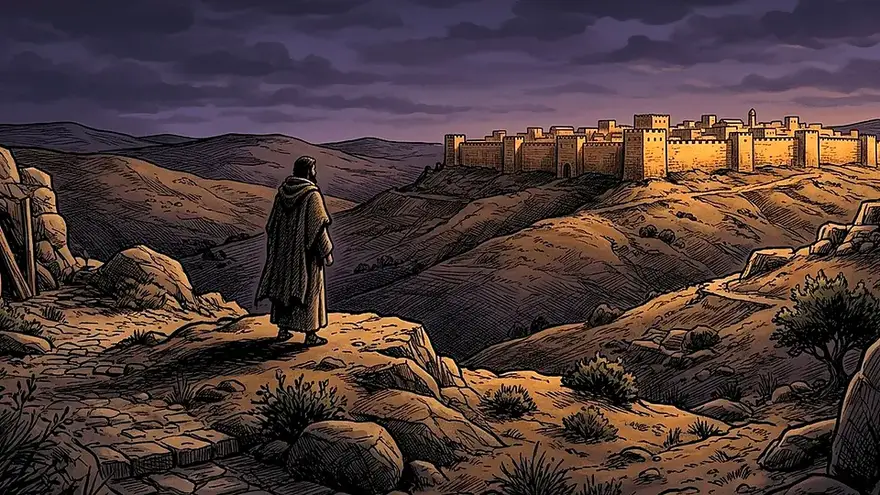
Renaissance paintings show Jesus dragging a freshly milled 300-pound cross down Jerusalem's alleys. Roman texts and Judean forestry paint a grittier reality: siege engines had stripped Jerusalem's hills of tall trees (Josephus, Jewish War 5.523). Execution squads routinely left scarred upright posts (stipes) standing outside gates while condemned men carried only the horizontal crossbeam (patibulum) across their shoulders.
In 1968, diggers at Giv'at ha-Mivtar in northern Jerusalem uncovered first-century crucifixion victim Yehohanan ben Hagkol—his right heel bone still pierced by a 4.5-inch iron spike bent sharply into a knot of local olive wood!
John 19:17–19“So they took Jesus, and he went out, bearing his own cross (stauros), to the place called The Place of a Skull, which in Aramaic is called Golgotha... Pilate also wrote an inscription (titlon) and put it on the cross.”
Why It Matters: A complete solid-oak Roman cross weighed ~300 pounds; in Roman penal practice (Plutarch, Moralia 554A), condemned prisoners carried only the 75–100 lb horizontal patibulum beam to permanent upright stakes outside the city wall, while Acts uses xylon ('tree/wood') to invoke Deuteronomy 21:23!
Scrolls & Archaeology: In June 1968, bulldozer roadwork at Giv'at ha-Mivtar in northern Jerusalem uncovered a 1st-century CE Jewish limestone ossuary inscribed 'Yehohanan son of Hagkol' containing history's premier skeletal evidence of Roman crucifixion: a right heel bone (calcaneus) still pierced sideways by a 4.5-inch iron spike whose tip had hooked backward on a tough olive-wood knot so executioners could not pry the reusable iron out! Beneath Jerusalem's Church of the Holy Sepulchre, 20th-century excavations confirmed Golgotha actually stood inside a worked Iron Age white malaki-limestone quarry converted into first-century garden rock tombs just outside Herod Agrippa's later wall.
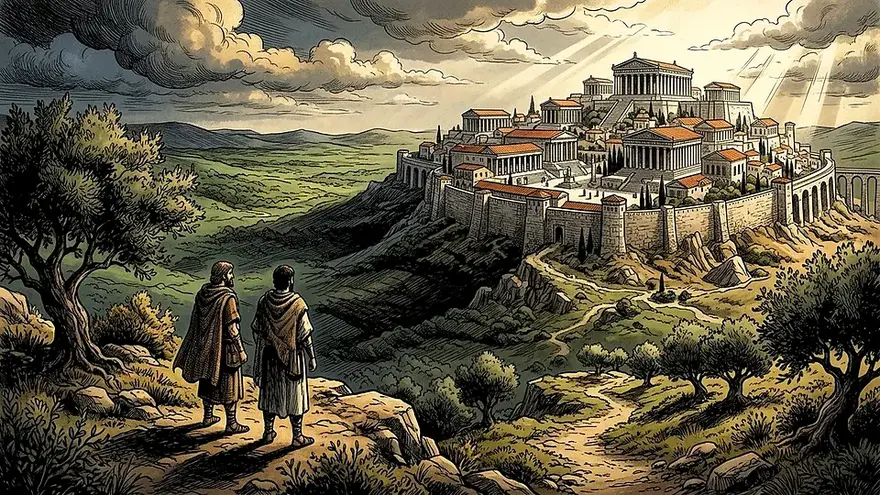
How Emperor Hadrian's 135 CE pagan temple locked Golgotha in a time capsule
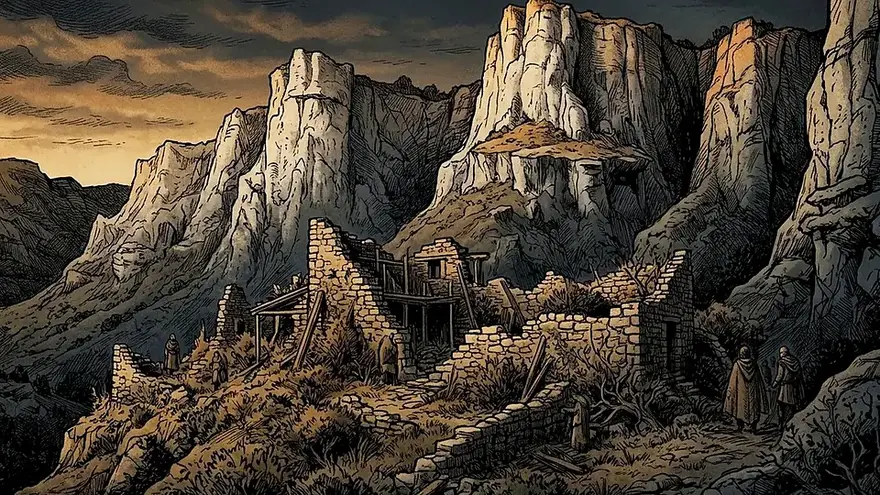
What happened to execution beams at Good Friday sundown? Jewish law treated bloodstained gibbets as corpse-impure items unfit for firewood, so crossbeams were tossed into nearby rock pits. Bedrock coring beneath Jerusalem's Church of the Holy Sepulchre confirms John 19:41 precisely: outside the second wall lay an abandoned limestone quarry containing a tall rock spur (Golgotha), cisterns, garden soil, and first-century shaft tombs.
In 135 CE, Roman Emperor Hadrian tried to erase Jewish-Christian memory there by burying the quarry beneath massive earthen fill to build a pagan Venus temple—inadvertently sealing the exact first-century spot!
John 19:41–42“Now in the place where he was crucified there was a garden, and in the garden a new tomb in which no one had yet been laid. So because of the Jewish day of Preparation, since the tomb was close at hand, they laid Jesus there.”
Constantine's 325 CE demolition, Helena's 326 CE visit, and Cyril of Jerusalem (348 CE)
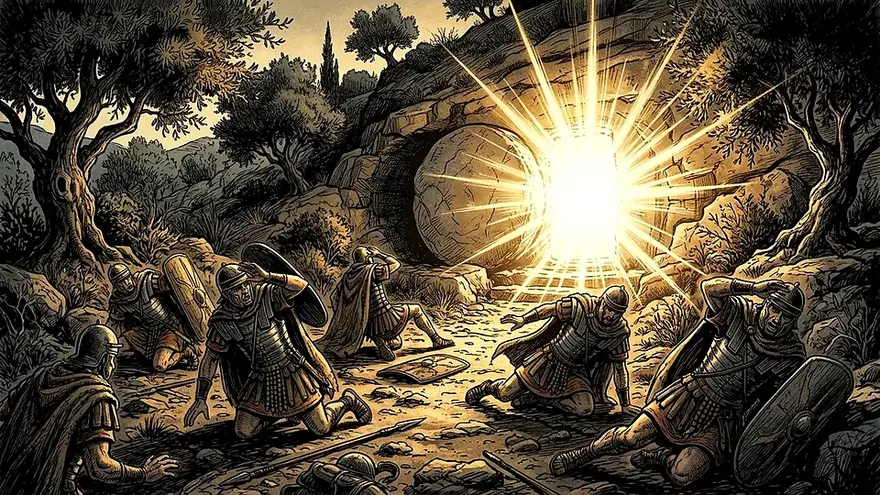
In 325 CE, Bishop Macarius told Emperor Constantine what lay buried under Hadrian's Venus podium. Eyewitness historian Eusebius (Life of Constantine 3.28) records everyone's shock when workers tore up the pagan stones, dug down to bedrock, and uncovered the rock-cut tomb!
Constantine's elderly mother, Empress Helena, visited Judea in 326–327 CE. Although Eusebius omits mention of wood, barely twenty years later in 348 CE, Jerusalem Bishop Cyril preached inside that church (Catechetical Lectures 4.10; 10.19) that wood of the Cross found there had already been shared across the Roman world—followed by Ambrose (395 CE) recording three quarry crosses and Pilate's plaque.
John 19:20“Many of the Jews read this inscription, for the place where Jesus was crucified was near the city, and it was written in Aramaic, in Latin, and in Greek.”
John Calvin's 'cargo ship' joke vs. Rohault de Fleury's 1870 cubic-millimeter audit
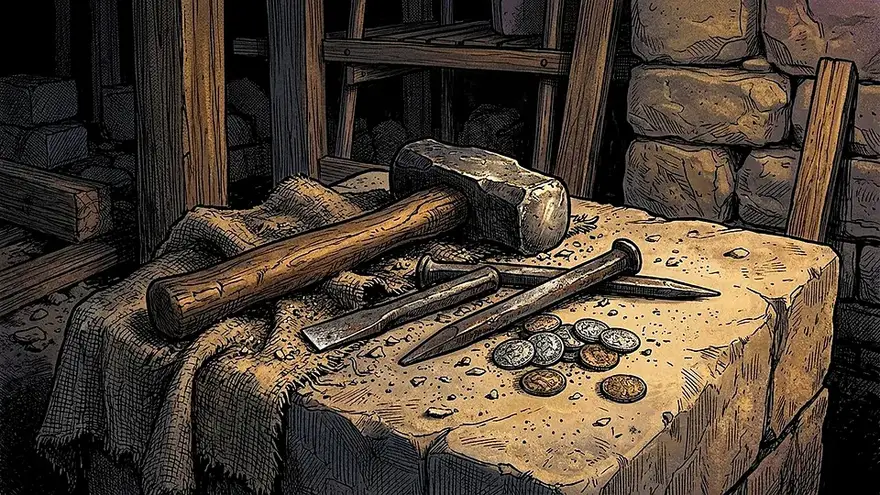
Medieval Crusader looting and indulgence peddling flooded Europe with ornate reliquaries, prompting Reformer John Calvin in 1543 (Treatise on Relics) to joke that every claimed True Cross piece combined 'would make a full load for a very large ship!'
In 1870, French architect Charles Rohault de Fleury tested Calvin's quip with geometry. Measuring every documented Cross relic across Rome, Paris, Brussels, Venice, Mount Athos, and Jerusalem—nearly all grain-sized splinters inside giant jeweled frames—he calculated a global volume of roughly 3,942,000 cubic millimeters (~0.004 cubic meters): less than 3 percent of a single pine cross!
Galatians 6:14“But far be it from me to boast except in the cross (staurō) of our Lord Jesus Christ, by which the world has been crucified to me, and I to the world.”
Timeline of Golgotha's Quarry & True Cross Traditions
Separating hard Jerusalem bedrock archaeology from fourth-century patristic reports and medieval relic trade.
| Date | Historical / Archaeological Milestone | Primary Evidence |
|---|---|---|
| ~30–33 CE | Crucifixion & burial in abandoned limestone quarry outside 2nd wall | John 19:17–42; Iron Age quarry & 1st-c. kokhim tombs on site |
| 135 CE | Emperor Hadrian buries Golgotha quarry under Venus/Aphrodite podium | Eusebius, Life of Constantine 3.26; Jerome, Ep. 58 (statue marker) |
| 325–327 CE | Hadrian's podium demolished; tomb uncovered; Empress Helena visits | Eusebius (witness to tomb dig); Helena's pilgrimage records |
| 348 CE | Wood of the Cross displayed in Jerusalem & slivers shared abroad | Cyril of Jerusalem, Catechetical Lectures 4.10; 10.19; Egeria (381 CE) |
| 1870 CE | Global volumetric measurement of all surviving Cross relics | Rohault de Fleury: ~0.004 m³ total (<3% of one wooden cross) |
What to Remember
- Jerusalem's 1968 discovery of crucified Yehohanan's heel bone—pierced by an iron spike bent into knotted olive wood—confirmed Roman Judea's improvised local crucifixion timber.
- By burying Golgotha and its garden tomb under tons of fill to build a pagan temple to Venus/Aphrodite in 135 CE, Emperor Hadrian inadvertently pinpointed and protected the exact first-century quarry until 326 CE.
- In 1870, French architect Charles Rohault de Fleury measured every claimed True Cross relic worldwide and proved John Calvin's 'ship's cargo' joke wrong: combined, all known slivers totaled less than 3% of one cross.