Matthew 2:1 calls the visitors magoi apo anatolōn ('Magi from the east')—never kings, and never three in number. In the first century, Magi were Parthian or Persian Zoroastrian priestly astronomers and royal kingmakers. Arriving in a diplomatic caravan up to two years after Jesus's birth, they entered a Bethlehem house (oikia), alarming King Herod and all Jerusalem.
Why 'all Jerusalem' panicked when Parthian kingmakers rode into town
Three lone camel riders would hardly rattle a Roman garrison city, yet Matthew 2:3 says King Herod was troubled 'and all Jerusalem with him.' In Greek, Matthew calls the visitors magoi (from Old Persian maguš)—the hereditary Zoroastrian priesthood of Persia and Parthia who read celestial omens and ratified eastern kings.
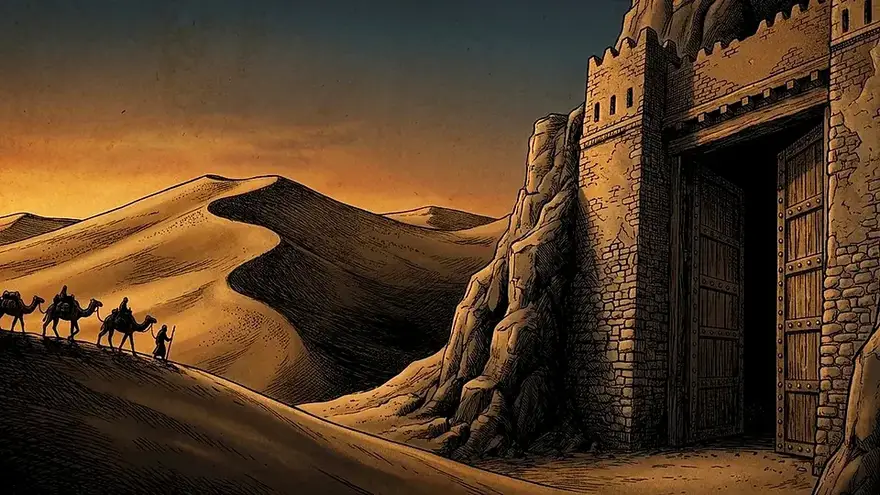
Just decades earlier in 40 BCE, Parthian cavalry had invaded Judea and driven young Herod to flee for his life to Rome. An aging, paranoid Roman client-king watching an armed eastern diplomatic retinue ride through Jerusalem's gates asking for Judea's rightful newborn monarch smelled an instant succession crisis.
Matthew 2:1–3“Behold, wise men (magoi) from the east came to Jerusalem, saying, 'Where is he who has been born king of the Jews?' ... When Herod the king heard this, he was troubled, and all Jerusalem with him.”
Why It Matters: 1611 KJV translated Greek magos as 'wise men' in Matthew 2:1 but as 'sorcerer' in Acts 13:6, 8—hiding the specific Parthian Zoroastrian priestly kingmaker guild whose arrival at Judea's border terrified Rome's client king Herod!
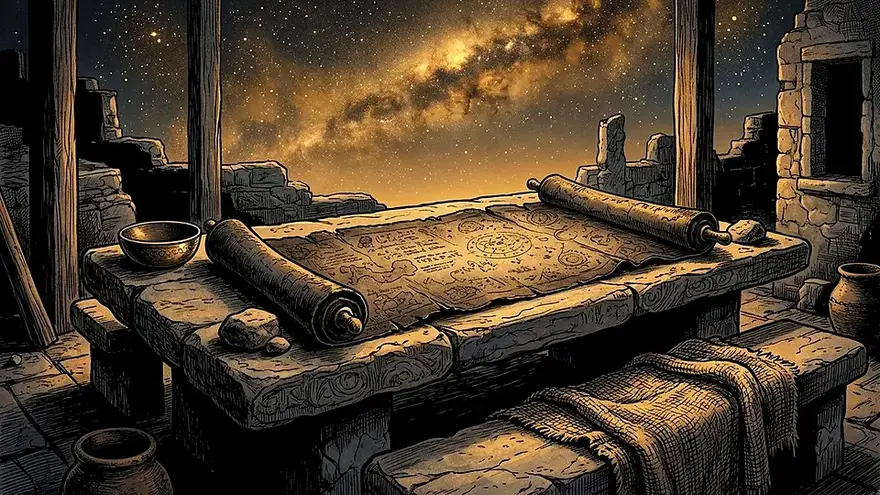
Scrolls & Archaeology: Carved high on a limestone cliff at Behistun in western Iran in 520 BCE, Darius the Great's trilingual inscription preserves Old Persian maguš for the hereditary Median priestly caste tasked with royal succession omens and sky-watching. Roman historians Suetonius (Nero 13) and Cassius Dio (Roman History 63.1–7) confirm Matthew 2's geopolitical realism: in 66 CE an actual eastern caravan of Parthian Magi led by King Tiridates I rode to pay homage to Nero and deliberately returned 'by another route.'
Not at the manger: a Bethlehem house ('oikia') and a toddler ('paidion')
Christmas nativity sets crowd shepherds, angels, oxen, and Magi around the same stable trough on night one, blending Luke 2 with Matthew 2. In Luke, local shepherds find a newborn infant (brephos) lying in an animal manger (phatnē) hours after birth, forty days before Mary and Joseph offer two inexpensive turtledoves at Jerusalem's Temple.
Matthew 2:11 stages a much later visit: stepping inside 'the house' (oikia), the Magi bow before 'the child' (paidion). After interrogating the astronomers on the exact date the star first rose, Herod orders Bethlehem boys killed up to 'two years old and under' (Matthew 2:16), showing months—or over a year—had elapsed.
Matthew 2:11, 16“And going into the house (oikia), they saw the child (paidion) with Mary his mother, and they fell down and worshiped him... Herod sent and killed all the male children in Bethlehem... two years old or under.”
What did eastern astronomers see? The 7 BCE Jupiter-Saturn triple conjunction
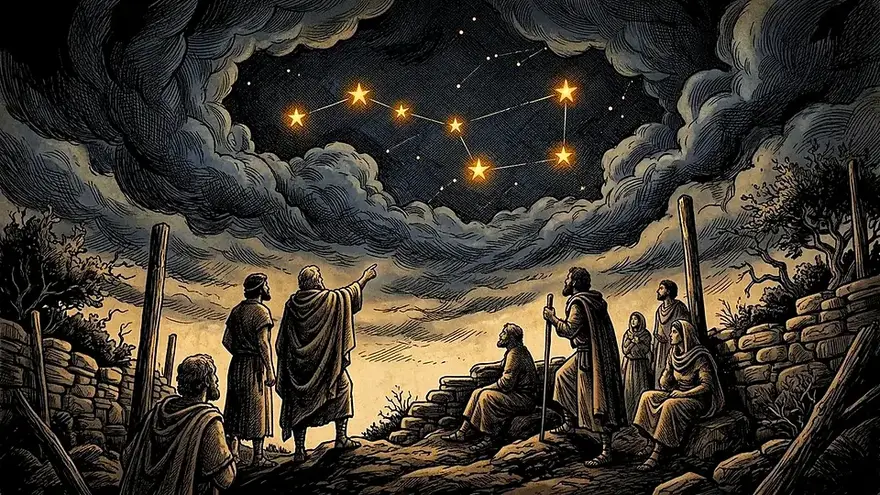
Babylonian cuneiform star almanacs excavated along the Euphrates record a rare celestial spectacle across 7 BCE. Three times between May and December of that year, bright Jupiter (ancient Babylon's royal planet) and Saturn (linked by Mesopotamian astrologers to Syria-Judea) converged closely inside the constellation Pisces.
Johannes Kepler first recalculated that triple conjunction in 1604, while other scholars point to Chinese imperial court records of a bright nova in 5 BCE or Jupiter's 3–2 BCE pairings with Regulus ('Little King'). Because Daniel had once served as chief prefect over Babylon's wise men (Daniel 2:48), eastern sky-watchers already possessed Hebrew messianic star prophecies.
Numbers 24:17 & Daniel 2:48“Numbers 24:17 — 'A star shall come out of Jacob, and a scepter shall rise out of Israel.' · Daniel 2:48 — 'The king gave Daniel high honors... and made him chief prefect over all the wise men of Babylon.'”
How three gifts and Psalm 72 invented 'Three Kings' named Caspar, Melchior, and Balthazar
Read Matthew 2:11 carefully and notice that only the gifts are numbered—gold, frankincense resin, and burial myrrh—never the travelers who unpacked them. Early Syriac churches pictured twelve Magi arriving in Jerusalem, while third-century Roman catacomb frescoes painted two, three, or four men dressed in pointed Persian caps and trousers rather than royal crowns.
Around 200 CE, church writer Tertullian connected Matthew's visitors to Psalm 72:10 ('May the kings of Sheba and Seba bring gifts') and Isaiah 60:6, transforming eastern priests into monarchs. Their traditional Western names—Balthazar, Melchior, and Caspar—first appear in a sixth-century Latin chronicle and Ravenna's glittering church mosaics.
Psalm 72:10–11 & Isaiah 60:6“Psalm 72:10 — 'May the kings of Tarshish and of the coastlands render him tribute; may the kings of Sheba and Seba bring gifts!' · Isaiah 60:6 — 'They shall bring gold and frankincense.'”
Christmas Card Tradition vs. Matthew 2 & First-Century History
Every detail separating medieval nativity pageants from Matthew's first-century Greek narrative.
| Detail | Popular Nativity Tradition | Matthew 2 Greek Text & History |
|---|---|---|
| Title & Role | Three crowned monarchs ('Three Kings') | Magoi: Parthian/Persian priestly astronomers & kingmakers |
| How Many? | Strictly three riders (Caspar, Melchior, Balthazar) | Unspecified caravan size; Syriac tradition counted twelve |
| Where They Met Jesus | At the open stable manger beside shepherds | Inside a Bethlehem house (oikia) with Mary (Matthew 2:11) |
| Jesus's Age | Newborn night of birth | Paidion ('toddler/child'), up to 1–2 years old (Matthew 2:16) |
| Why Jerusalem Panicked | Unexplained royal jealousy alone | Armed delegation from rival Parthia seeking a new Judean king |
What to Remember
- Greek magoi refers to hereditary Medo-Persian priestly astronomers and royal kingmakers from Rome's eastern rival, Parthia—the same scholarly guild Daniel once led in Babylon (Daniel 2:48).
- Matthew 2:11 places the Magi inside a lived-in 'house' (oikia) visiting a 'young child' (paidion) up to two years after birth, never beside Luke's shepherds at the manger.
- Christian tradition turned priests into 'Three Kings' centuries later by counting their three Arabian gifts and linking Matthew 2 to Psalm 72:10 and Isaiah 60:6.