Ananias and Sapphira did not die for withholding money; Peter explicitly affirmed their land and cash remained 100% optional (Acts 5:4). Instead, Luke uses the rare Greek verb nosphizomai (νοσφίζομαι, 'pilfer sacred property')—the exact verb used for Achan's theft in Greek Joshua 7:1—framing their staged lie as temple-inauguration sacrilege against the Holy Spirit.
What Peter actually says in Acts 5:4: keeping 100% was completely allowed
Casual readers often assume early Jerusalem believers lived under compulsory wealth-sharing where holding back savings carried the death penalty. Acts 4:36–37 sets the actual stage: Joseph of Cyprus (nicknamed Barnabas) voluntarily sold a field and laid the full price at the apostles' feet, earning deep respect across the community.
Wanting Barnabas's public acclaim at a discount, Ananias and Sapphira sold land, pocketed a share, and staged the rest as a total sacrifice. Peter clears up the property law immediately in Acts 5:4: 'While it remained unsold, did it not remain your own? And after it was sold, was it not at your disposal?'
Acts 5:3–4“While it remained unsold, did it not remain your own? And after it was sold, was it not at your disposal? Why is it that you have contrived this deed in your heart? You have not lied to man but to God.”
Why It Matters: English 'kept back' sounds like ordinary financial budgeting (which Peter explicitly says was completely allowed in v. 4!), whereas Luke's rare verb nosphizomai deliberately quotes Septuagint Joshua 7:1—Achan's sacrilegious theft at Israel's entry into Canaan.
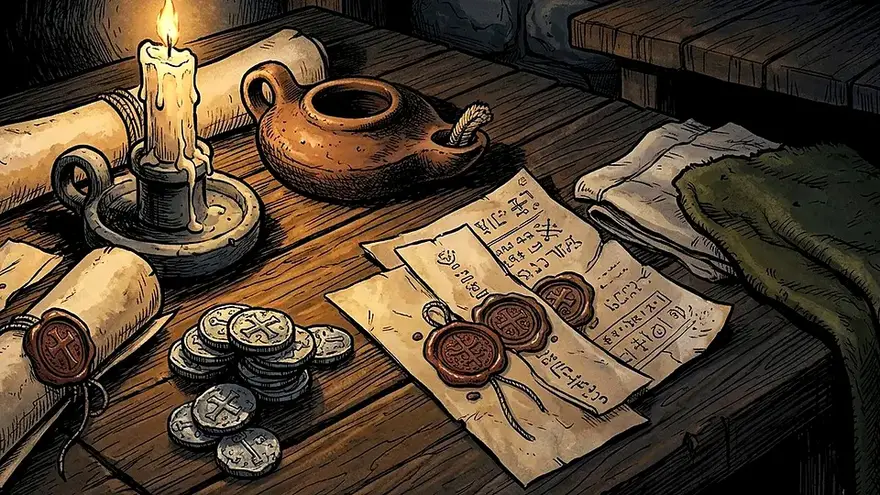
Scrolls & Archaeology: Outside Acts 5:2–3 and Titus 2:10 (slave pilfering), Greek nosphizomai appears in biblical literature exclusively in Joshua 7:1 LXX and 2 Maccabees 4:32, where corrupt high priest Menelaus steals golden vessels directly out of Jerusalem's Temple treasury. Qumran's Community Rule (1QS VI.24–25, c. 100 BCE) confirms how seriously Second Temple Judean covenant fellowships treated staged financial deceit, prescribing immediate punishment for any member who 'lies knowingly regarding property.'
One rare Greek word (nosphizomai) unlocks the hidden Joshua 7 parallel
In Acts 5:2–3, Luke chooses a surgical Greek verb for Ananias keeping back part of the proceeds: enosphisato (ἐνοσφίσατο, from nosphizomai, 'to pilfer or embezzle sacred property'). Across the entire Greek Septuagint translation of the Hebrew Bible, that verb appears in only one canonical story—Joshua 7:1.
Right after Israel crossed the Jordan into Canaan, Achan secretly pocketed consecrated silver and gold (enosphisanto in Greek Joshua 7:1), threatening the whole camp at the threshold of a new era. Luke's Greek-speaking Jewish audience caught the echo immediately: Ananias was a new Achan, smuggling rot inside God's newborn community.
Joshua 7:1 (Septuagint Verbal Link to Acts 5:2)“But the people of Israel broke faith in regard to the devoted things, for Achan... took [Greek LXX: enosphisanto] some of the devoted things.”
Temple-inauguration holiness: why threshold moments turn lethal
Notice a striking pattern across biblical history: instant divine judgment rarely falls during routine decades—it strikes at foundational inauguration moments when God's glory newly fills a dwelling. When the wilderness Tabernacle first ignited with divine fire in Leviticus 10:1–2, Aaron's sons Nadab and Abihu offered 'unauthorized fire' at the altar and died before the LORD.
In Acts 2 and 4:31, God's fiery presence had just relocated from stone temple courts into a living human temple—the Spirit-shaken church. Treating that Spirit-filled sanctuary like a stage set for religious image-management echoed Nadab and Abihu's irreverence at the Tabernacle's grand opening.
Leviticus 10:1–2“Now Nadab and Abihu, the sons of Aaron, each took his censer and put fire in it... and offered unauthorized fire before the LORD, which he had not commanded them. And fire came out from before the LORD and consumed them.”
Sapphira's three-hour window and the first word 'church' in Acts
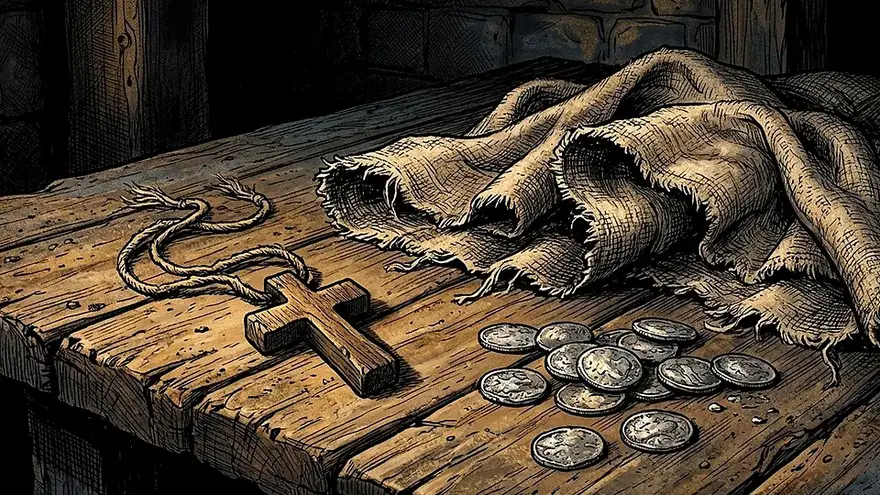
Three hours later, Sapphira walks in unaware of her husband's death, and Peter offers her a clean exit ramp to tell the truth: 'Tell me whether you sold the land for so much' (Acts 5:8). Rather than panicking in a split-second mistake, she recites the rehearsed figure—'Yes, for so much'—confirming a deliberate pact to 'test the Spirit of the LORD.'
Luke closes in Acts 5:11 with a landmark detail: 'And great fear came upon the whole ekklesia (ἐκκλησία, church).' That is the very first appearance of the word 'church' in Acts—showing God guards His people's integrity against internal hypocrisy even more fiercely than external arrest.
Acts 5:9, 11“Peter said to her, 'How is it that you have agreed together to test the Spirit of the LORD?' ... And great fear came upon the whole church and upon all who heard of these things.”
Sacred-Threshold Judgments Across Scripture
Why Acts 5 intentionally mirrors the founding moments of the Tabernacle, Promised Land, and Davidic Kingdom.
| Biblical Threshold | Passage | Transgression | What Was Newly Inaugurated |
|---|---|---|---|
| Tabernacle Consecration | Leviticus 10:1–3 | Nadab & Abihu offer unauthorized altar fire | God's glory newly dwelling inside Israel's wilderness tent |
| Conquest of Canaan | Joshua 7:1–26 | Achan pilfers (LXX nosphizomai) devoted silver & gold | Israel's first covenant foothold inside the Promised Land |
| Ark Brought Toward Zion | 2 Samuel 6:6–7 | David & Uzzah haul the Ark on a Philistine ox-cart | Establishing Jerusalem as the throne-center of David's reign |
| Birth of the Church | Acts 5:1–11 | Ananias & Sapphira pilfer (nosphizomai) & lie to the Spirit | The gathered church newly inhabited as God's living Temple |
What to Remember
- Acts 5:4 rules out forced communism: Peter explicitly says Ananias could have kept the field unsold or kept whatever portion of the money he wished.
- Luke's rare Greek verb nosphizomai ('misappropriate/pilfer') appears in only one Old Testament narrative in the Septuagint—Achan's consecrated-silver theft in Joshua 7:1.
- Sudden judgment in Scripture clusters at sacred inauguration thresholds: Sinai's Tabernacle (Leviticus 10), Promised Land entry (Joshua 7), and the Spirit-filled church (Acts 5).