In Daniel 9:27, 11:31, and 12:11, Hebrew shiqqutz meshomem ('detestable idol causing appalling ruin') is a satirical pun twisting the Syrian-Aramaic title of Olympian Zeus, Ba'al Shamem ('Lord of Heaven'). Fulfilled first in December 167 BCE under Antiochus IV, Jesus pointed ahead in Matthew 24:15 to Rome's 70 CE Temple profanation—a pattern early Christians also projected onto final antichrist.
The biting Hebrew pun hidden inside English 'Abomination of Desolation'
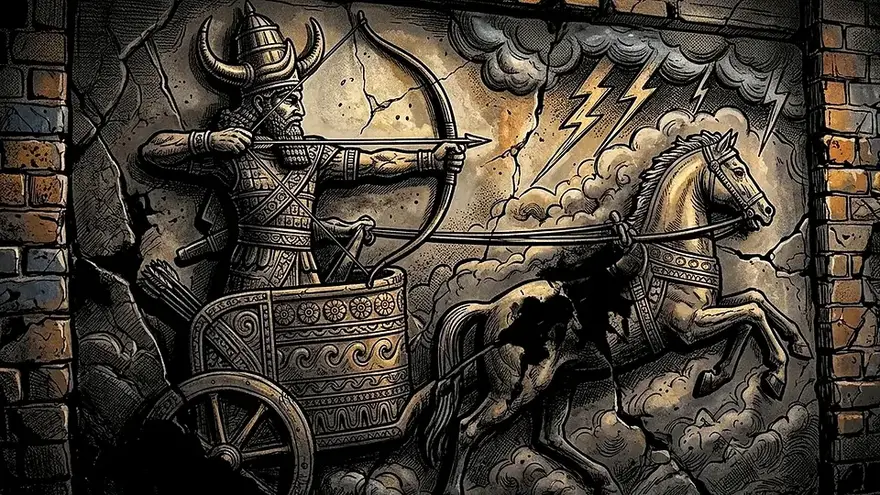
In English translation, 'the abomination of desolation' sounds cryptic and otherworldly. To second-century BCE Hebrew ears, it landed as fierce underground satire! When Hellenistic ruler Antiochus IV Epiphanes rededicated Jerusalem's Temple to Olympian Zeus, Aramaic-speaking Syrians hailed Zeus by the title Baʿal Šāmēm ('Lord of Heaven').
Devout Judean scribes refused to speak a pagan god's lofty title aloud. Instead, they replaced Baʿal ('Lord') with Shiqqutz ('vile idol-filth') and twisted Šāmēm ('Heaven') into the rhyming Hebrew participle Meshomem ('causing horror / desolation')! When Greek translators rendered shiqqutz meshomem word-for-word as bdelygma tēs erēmōseōs, the Hebrew rhyme vanished while the haunting title endured.
Daniel 11:31“Forces from him shall appear and profane the temple and fortress, and shall take away the regular burnt offering. And they shall set up the abomination that makes desolate (shiqqutz meshomem).”
Why It Matters: In earliest manuscripts of Mark 13:14, Mark pairs the NEUTER noun 'abomination' (to bdelygma) with a MASCULINE participle (hestēkota, 'standing [he]'), alerting readers ('let the reader understand!') to a personal desecrator rather than a mere stone statue!
Scrolls & Archaeology: German Semitist Eberhard Nestle proved in 1884 that Daniel's Hebrew phrase shiqqutz meshomem is an intentional Judean satirical distortion of Phoenician-Aramaic Ba'al Shamem ('Lord of Heaven')—the exact Semitic title Antiochus IV Epiphanes installed for Olympian Zeus atop Jerusalem's brazen altar in Kislev 167 BCE (2 Maccabees 6:2). Later Byzantine Greek scribes smoothed Mark 13:14's startling masculine participle hestēkota (preserved in 4th-century Sinaiticus and Vaticanus) into grammatically regular neuter hestos ('where it ought not') behind the 1611 KJV.

December 167 BCE: Antiochus IV's Zeus altar and the birth of Hanukkah
Ancient Jewish history book 1 Maccabees 1:54 pins down the exact calendar day Daniel 11:31 first came true: on the 15th of Chislev, 167 BCE, soldiers of Seleucid king Antiochus IV erected 'a desolating sacrilege' directly atop YHWH's stone altar of burnt offering in Jerusalem, sacrificing swine (Josephus, Antiquities 12.253) and outlawing Sabbath and Torah.
Out of that trauma erupted the Maccabean Revolt. Exactly three years later—on the 25th of Chislev, 164 BCE—Judah Maccabee reclaimed the Temple courts, dismantled the polluted altar stones, built a clean altar, and kindled the golden Menorah for an eight-day Feast of Dedication (Hanukkah, explicitly mentioned in John 10:22).
1 Maccabees 1:54 & 2 Maccabees 6:2“1 Macc 1:54 — 'On the fifteenth day of Chislev... they erected a desolating sacrilege upon the altar of burnt offering.' · 2 Macc 6:2 — 'To pollute the temple in Jerusalem and call it the temple of Olympian Zeus.'”
Why Jesus in 30 CE warned disciples it was about to happen AGAIN
Watch the shock in Matthew 24 and Mark 13: nearly two centuries AFTER Antiochus IV died, Jesus gazes at Herod's Second Temple in 30 CE, predicts its fall, and warns: 'When you see the abomination of desolation spoken of by the prophet Daniel, standing in the holy place... let those in Judea flee to the mountains!' (Matthew 24:15–16).
Notice two Gospel clues. In Mark 13:14, a masculine Greek participle (hestēkota, 'standing where HE ought not') modifies neuter bdelygma, pointing to a living commander! Meanwhile, writing for Gentile readers, Luke 21:20 decodes the Hebrew idiom directly: 'When you see Jerusalem surrounded by armies, then know that its desolation (erēmōsis) has come near.'
Matthew 24:15–16 & Luke 21:20“Matt 24:15 — 'When you see the abomination of desolation spoken of by the prophet Daniel, standing in the holy place (let the reader understand), then let those who are in Judea flee.' · Luke 21:20 — 'When you see Jerusalem surrounded by armies, then know that its desolation has come near.'”
August 70 CE Roman eagles—and why biblical prophecy telescopes forward
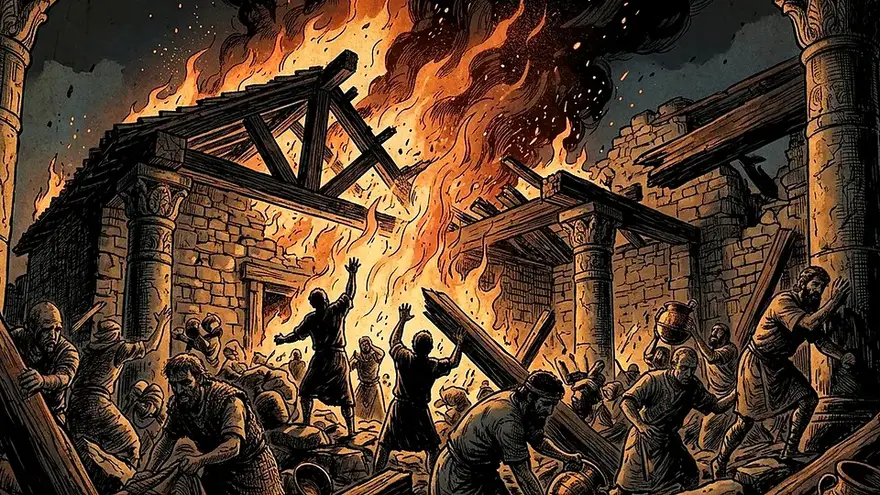
Within forty years of Jesus's warning, catastrophe struck Jerusalem: Zealot factions spilled priestly blood inside the Sanctuary (67–68 CE), and in August 70 CE Titus's legions stormed the burning Temple, planted idolatrous eagle standards (signa) opposite the eastern gate, and sacrificed to them in the courts (Josephus, Jewish War 6.316)—while Christians escaped across the Jordan to Pella.
How could Daniel's phrase fit both 167 BCE and 70 CE—and still inspire Paul's 'man of lawlessness' taking his seat in God's temple (2 Thessalonians 2:4) and Irenaeus's futurist reading? Biblical prophecy works like nested mountain ridges: Antiochus and Titus expose the recurring pattern of empire trying to enthrone itself as God.
2 Thessalonians 2:3–4“The man of lawlessness is revealed... who opposes and exalts himself against every so-called god or object of worship, so that he takes his seat in the temple of God, proclaiming himself to be God.”
Three Historic Horizons of the 'Abomination of Desolation'
How 167 BCE Seleucid Syria, 70 CE Imperial Rome, and early Christian eschatology share one prophetic pattern.
| Horizon | Historical / Textual Anchor | How the Sanctuary Was Profaned |
|---|---|---|
| 1. Seleucid Fulfillment (167 BCE) | Daniel 11:31 · 1 Maccabees 1:54 | Antiochus IV builds an Olympian Zeus ('Baal Shamem') altar atop YHWH's altar and sacrifices pigs |
| 2. Failed Dress Rehearsal (40 CE) | Philo & Josephus (Ant. 18.261) | Emperor Caligula orders a giant golden statue of himself erected inside Jerusalem's Temple—halted only by his assassination in 41 CE |
| 3. Roman Fulfillment (67–70 CE) | Matthew 24:15 · Luke 21:20 · Josephus | Zealot bloodshed in the Sanctuary followed by Titus's legions worshiping pagan eagle standards inside the burning Temple |
| 4. Final Typological Horizon | 2 Thessalonians 2:3–4 · Irenaeus | Ultimate anti-God ruler usurping worship due to God alone before Christ's visible Parousia |
What to Remember
- Hebrew shiqqutz meshomem ('filthy idol that appalls') deliberately rhymes with Syrian-Aramaic Ba'al Shamem ('Lord of Heaven'), mocking the pagan Zeus altar forced onto Jerusalem in December 167 BCE.
- Speaking nearly two centuries after Antiochus IV, Jesus warned disciples in Matthew 24:15 to flee Judea when they saw Daniel's pattern strike again—fulfilled when Roman legions planted idol-standards and burned the Temple in August 70 CE.
- Biblical prophecy operates by recurring typological pattern: 167 BCE (Antiochus) and 70 CE (Titus) also furnished Paul's template for a final 'man of lawlessness' exalting himself in 2 Thessalonians 2:4.