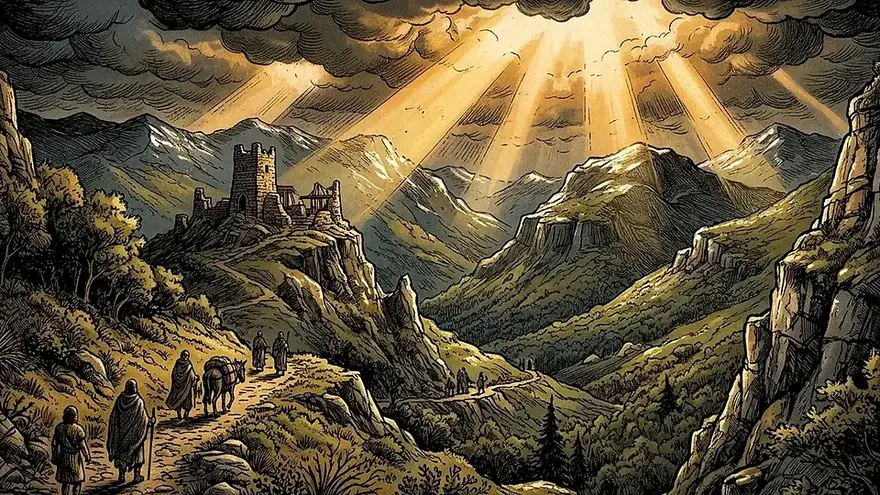
In English, 'Armageddon' means a world-ending war, yet the word appears once in the entire Bible (Revelation 16:16) as a Greek transliteration of Hebrew Har-Magedon ('Mountain of Megiddo'). Guarding Canaan's Jezreel Valley highway, Tel Megiddo hosted over thirty ancient battles—yet Megiddo is a 70-foot mound, fusing Elijah's overhanging Mount Carmel victory with Old Testament battlefield memory.
One verse in the entire Bible—and history's most contested highway pass
Read from Genesis 1 to Jude and the word 'Armageddon' never appears once. It surfaces solely in Revelation 16:16, where John pauses to note the language: demonic spirits gather earth's kings 'at the place that in Hebrew is called Harmagedōn'—combining Hebrew har ('mountain') with Megiddon ('Megiddo').
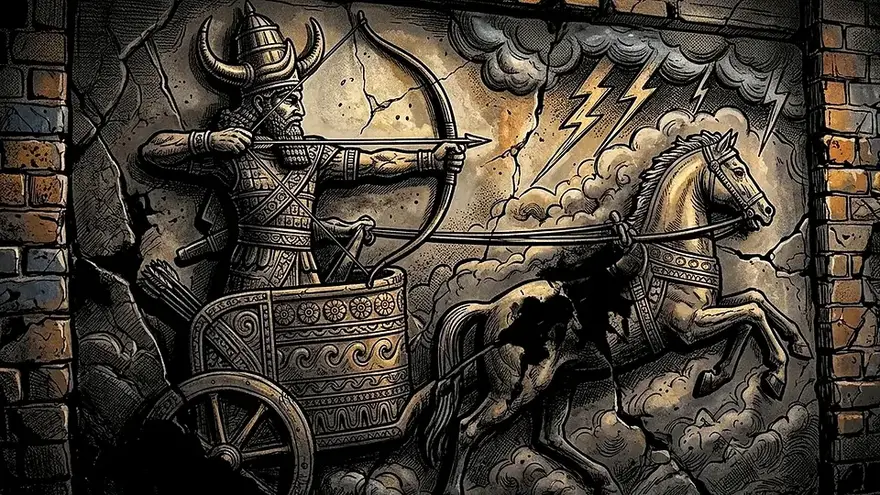
Military historians call Megiddo the most fought-over real estate of the ancient Near East. Commanding the narrow Nahal Iron pass where the coastal trade highway from Egypt spilled into northern Israel's Jezreel Valley toward Damascus and Babylon, Tel Megiddo saw over thirty battles—beginning in 1457 BCE when Pharaoh Thutmose III boasted, 'Capturing Megiddo is capturing a thousand towns!'
Revelation 16:16“And they assembled them at the place that in Hebrew is called Armageddon (Harmagedōn).”
Why It Matters: Dropping the Greek rough-breathing 'H-' turned Harmagedon into English 'Armageddon,' hiding Hebrew Har ('Mountain')—a prophetic fusion of Tel Megiddo's blood-soaked chariot pass with Elijah's overhanging Mount Carmel showdown right above it!
Scrolls & Archaeology: Carved onto the sandstone walls of Karnak's Temple of Amun in Egypt, Pharaoh Thutmose III's military annals document the Battle of Megiddo (~1457 BCE—history's first battle recorded with eyewitness tactical casualty counts), declaring that 'capturing Megiddo is the capturing of a thousand cities!' Because Megiddo itself is an artificial 70-foot occupational mound (tel) rather than a natural mountain (har), Revelation 16:16 deliberately merges Israel's classic valley battlefield (Judges 5:19; 2 Kings 23:29) with Zion/Carmel cosmic-mountain prophecy.
Deborah's mud-trapped chariots—and the arrow that killed King Josiah
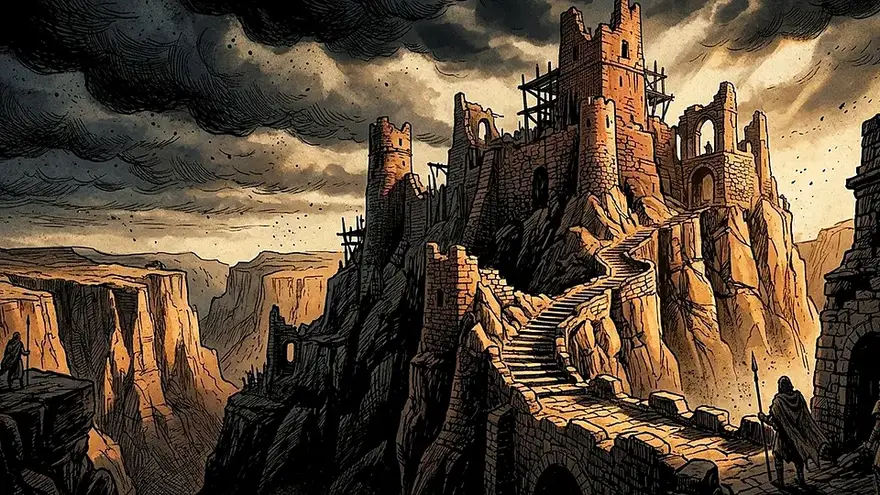
For anyone steeped in the Hebrew Scriptures, saying 'Megiddo' instantly summoned two dramatic turning points. In Judges 5:19–21, Canaanite kings roll 900 iron-wheeled chariots out 'by the waters of Megiddo,' only for God's sudden downpour to swell the Kishon River and mire superpowers helplessly in mud before Deborah and Barak.
Seven centuries later came Megiddo's deepest heartbreak: in 609 BCE, Jerusalem's beloved reformer King Josiah rode out to Megiddo against Pharaoh Necho II and died pierced by Egyptian arrows (2 Kings 23:29). That national trauma never healed; Zechariah 12:11 compares end-time weeping over God's 'pierced one' directly to 'the mourning in the plain of Megiddo.'
Judges 5:19 & 2 Kings 23:29“Judges 5:19 — 'The kings came, they fought... at Taanach, by the waters of Megiddo.' · 2 Kings 23:29 — 'Pharaoh Neco killed him at Megiddo, as soon as he saw him.'”
The geographical riddle: Megiddo is a 70-foot mound, NOT a mountain!
Stand atop Tel Megiddo today—twenty-six stacked ancient cities overlooking flat farmland—and a geographical paradox jumps out. Hebrew Scripture always calls the site the 'Plain' (biq'ah) or 'Waters' of Megiddo, and the artificial mound (tel) rises barely 70 feet high. Literally speaking, no 'Mountain of Megiddo' exists on any map!
Why did John coin Har-Magedon ('Mountain of Megiddo')? Towering directly above Megiddo's pass stands Mount Carmel, where Elijah defeated Baal's false prophets with fire from heaven (1 Kings 18)—right after Revelation 16:13 introduces 'the false prophet'! Simultaneously, Har-Magedon echoes Isaiah 14:13's Har-Mo'ed ('Mount of Assembly'), turning a valley fortress into a cosmic showdown.
Zechariah 12:11 & Isaiah 14:13“Zechariah 12:11 — 'As great as the mourning for Hadad-rimmon in the plain (biq'ah) of Megiddo.' · Isaiah 14:13 — 'I will sit on the mount of assembly (har-mo'ed) in the far reaches of the north.'”
Revelation's biggest surprise: nobody actually fights a two-sided battle there
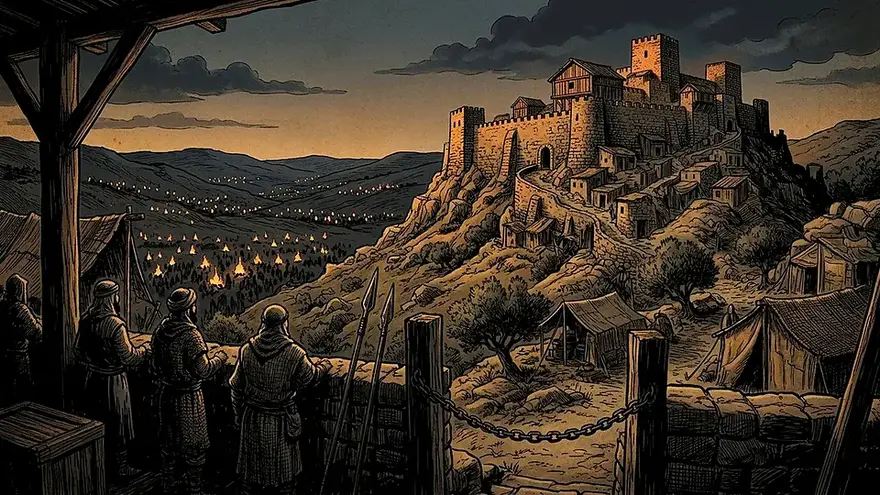
Pop-prophecy movies picture millions of soldiers clashing with tanks across Megiddo's valley floor (which measures barely 14 by 20 miles). Yet read Revelation 16:16–17 and 19:11–21 line by line and watch the anticlimax: in 16:16 kings assemble at Harmagedon, and in 16:17 the seventh angel pours his bowl and God's voice from the temple simply announces, 'It is done!'
Even when John replays the final confrontation in Revelation 19:13–21, no human believer swings a sword, and Christ's robe is already dipped in blood BEFORE any army meets Him—His own cross! The sole weapon anywhere on Christ's side is a sharp sword coming out of His mouth, picturing God's truth effortlessly dismantling every deceitful empire.
Revelation 16:17 & 19:15“Rev 16:17 — 'A loud voice came out of the temple, from the throne, saying, It is done!' · Rev 19:15 — 'From his mouth comes a sharp sword with which to strike down the nations.'”
Layers of Meaning Packed Into 'Har-Magedōn' (Revelation 16:16)
Like calling a political downfall 'Waterloo,' John fuses four Old Testament memories into one Hebrew compound word.
| Biblical Echo | Key Scripture | What It Contributes to Revelation 16 |
|---|---|---|
| Waters of Megiddo | Judges 5:19–21 | 900 unbeatable Canaanite chariots swept away overnight when heaven itself fights |
| Plain of Megiddo | 2 Kings 23:29 · Zech 12:10–11 | Righteous Josiah slain—flipped in Revelation so wicked kings fall while tribes mourn the Pierced One |
| Mount Carmel Ridge | 1 Kings 18:19–40 | Towering directly over Megiddo: Elijah exposing Jezebel's false prophets with fire from God |
| Har-Mo'ed ('Mount of Assembly') | Isaiah 14:13 · Ezek 38:8 | Rebel Babylon's boast to seize God's cosmic mountain turned into empire's final Waterloo |
What to Remember
- Revelation 16:16 explicitly flags Harmagedōn as a Hebrew name—Har ('mountain') + Megiddon ('Megiddo'), ancient Canaan's bloodiest chariot choke point.
- Because Tel Megiddo is a 70-foot settlement mound on a flat valley floor rather than a mountain, Har-Magedon fuses Megiddo's battlefield history with Mount Carmel rising directly behind it (1 Kings 18) and Isaiah 14:13's 'Mount of Assembly.'
- Surprisingly, nobody fights a conventional battle at Armageddon in Revelation 16 or 19: rebel kings assemble, God declares 'It is done!' and Christ conquers solely by the spoken word of His mouth.