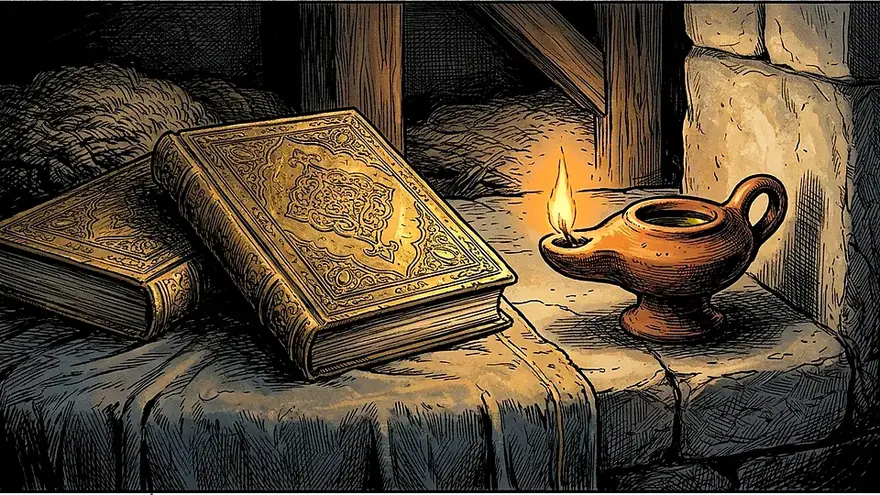
No single secret council 'banned' a unified stack of books from the Bible; instead, non-canonical and disputed works fall into four completely different historical categories. First are ancient Israelite chronicles quoted inside the Bible itself (such as the Book of Jasher) that simply perished in antiquity; second are Second Temple Jewish works like 1 Enoch and Jubilees, kept by the Ethiopian Church; third are the Deuterocanonical/Apocrypha books of the Greek Septuagint retained by Catholic and Orthodox Bibles but moved out by 16th-century Protestants; and fourth are 2nd–4th century Gnostic gospels unearthed at Nag Hammadi in 1945.
Lost books that the Bible itself quotes by name
More than twenty times, Old Testament writers tell you to go check another ancient book for the rest of a story—including the Book of the Wars of the Lord and the Book of Jasher.
Nobody banned these books. They were royal chronicles and poetry scrolls that simply perished when Jerusalem and ancient libraries were destroyed.
Joshua 10:13“So the sun stood still, and the moon stopped... Is this not written in the Book of Jasher?”
Why It Matters: Original 1611 King James printings actually bound 80 books—placing 14 Apocrypha books between Malachi and Matthew—while Joshua 10:13 and 2 Samuel 1:18 openly cite an older Hebrew poetry anthology that vanished in antiquity.
Scrolls & Archaeology: In Codex Vaticanus (B) at 3 Kingdoms 8:53a (parallel to 1 Kings 8:12–13), Solomon's Temple dedication poem is attributed to biblion tēs ōdēs ('the Book of Song')—a classic Hebrew consonant transposition between Sefer ha-Yashar (הישר) and Sefer ha-Shir (השיר). Meanwhile, the English 'Book of Jasher' sold in modern bookstores is a medieval rabbinic midrash printed in Venice in 1625 combined with Jacob Ilive's 1751 London forgery.
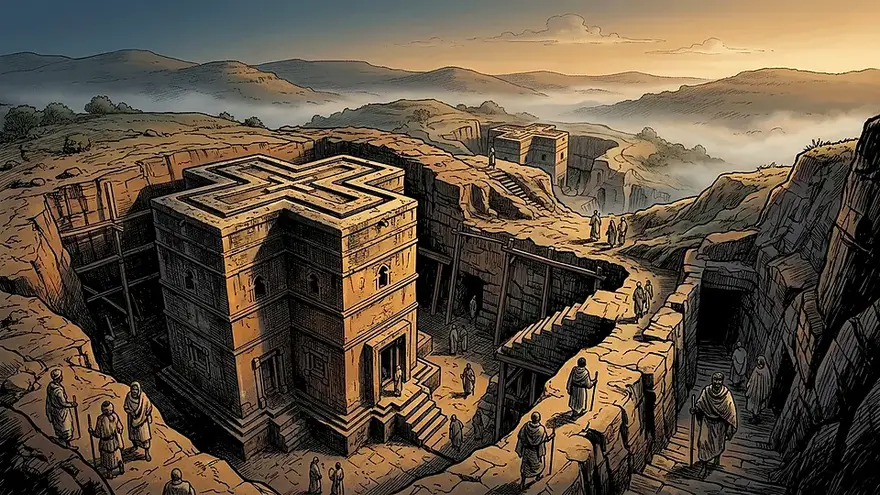
The Book of Enoch: quoted in the New Testament, kept in Ethiopia
The Book of Enoch expands Genesis 6 into an epic story of 200 rebel angels. Even though most Bibles leave it out, the New Testament letter of Jude quotes Enoch almost word for word.
Eleven Aramaic copies turned up in the Dead Sea Scrolls, and the Ethiopian Orthodox Church still prints 1 Enoch and Jubilees inside its 81-book Bible today.
Jude 1:14–15 (quoting 1 Enoch 1:9)“Enoch, the seventh from Adam, prophesied, saying, 'Behold, the Lord comes with ten thousands of his holy ones...'”
The Apocrypha: why Catholic Bibles have 7 more books than Protestant ones
Before Jesus's birth, Greek-speaking Jews used the Septuagint translation, which included books like Tobit, Judith, Wisdom, Sirach, and 1–2 Maccabees alongside the Hebrew scrolls.
During the 1500s Reformation—especially over 2 Maccabees 12:45 mentioning prayers for the dead—Martin Luther moved those books into a separate appendix because they weren't in the rabbinic Hebrew canon.
2 Maccabees 12:45“Therefore he made atonement for the dead, so that they might be delivered from their sin.”
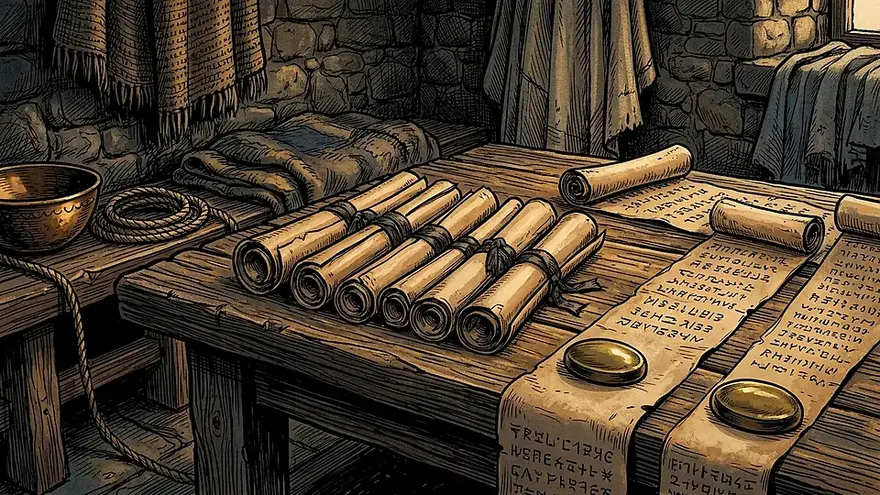
The Nag Hammadi 'Banned Gospels' found in a jar in 1945
Works like the Gospel of Thomas, the Gospel of Judas, and the Infancy Gospel of Thomas weren't eyewitness 1st-century biographies—they were written 100 to 250 years after Jesus.
Early Christians left them out because their theology turned salvation into secret Gnostic passwords rather than the historical ministry known to the first churches.
Luke 1:1–2“Many have undertaken to compile a narrative... just as those who from the beginning were eyewitnesses and ministers of the word have delivered them to us.”
Why Bibles Have 66, 73, 79, or 81 Books
Switch between Christian traditions below to watch books light up, then tap any book to see why it’s there.
Every highlighted card belongs to the tradition you selected; dimmed cards sit outside that canon.
Read the Lost Books Story →Four Categories People Mistakenly Lump Together as 'Banned Books'
Distinguishing vanished Old Testament chronicles, Second Temple scrolls, the Septuagint Deuterocanon, and late Gnostic texts.
| Category | Famous Examples | Approximate Date | Status Today |
|---|---|---|---|
| Lost Israelite Sources | Book of Jasher, Wars of the Lord | 1200–600 BCE | Cited inside the OT; physically lost in antiquity |
| Second Temple Jewish | 1 Enoch, Book of Jubilees | 300–100 BCE | Quoted in Jude; canonical in Ethiopian 81-book Bible |
| Deuterocanon / Apocrypha | Tobit, Wisdom, Sirach, 1–2 Maccabees | 250–100 BCE | In Catholic (73) & Orthodox (79) Bibles; out of Protestant (66) |
| Gnostic Codices | Gospel of Thomas, Gospel of Judas | 120–300 CE | Unearthed at Nag Hammadi (1945); outside all historic canons |
What to Remember
- Over twenty lost sources—including the Book of the Wars of the Lord (Numbers 21:14) and the Book of Jasher (Joshua 10:13; 2 Samuel 1:18)—are cited by biblical authors with reverence, not condemnation.
- Jude 1:14–15 quotes 1 Enoch 1:9 nearly word-for-word, and eleven Aramaic Enoch manuscripts survived in the Qumran caves.
- The Apocalypse of Peter appears alongside Revelation in the 2nd-century Muratorian Fragment as a book early churches were split over before Revelation won universal consensus.