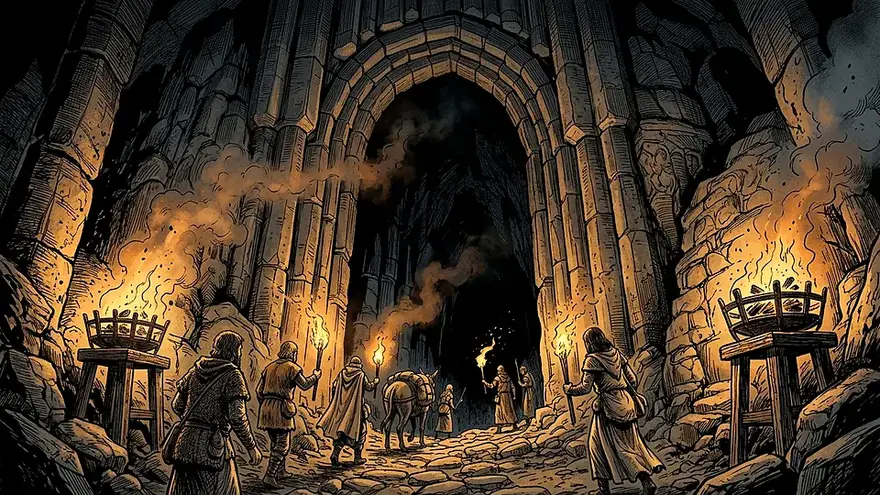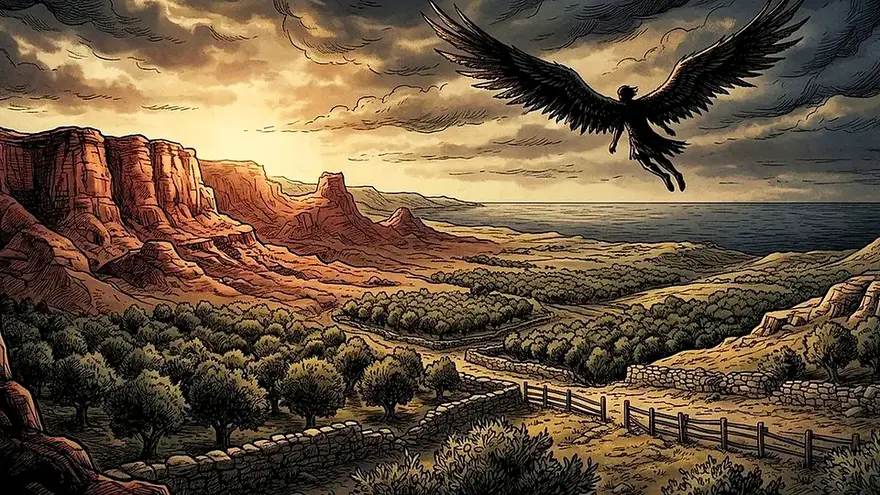

Asherah (Hebrew אֲשֵׁרָה, appearing 40 times in the Old Testament) was both Canaan's royal mother-goddess—known in Ugaritic tablets as Athirat, consort of El—and her carved wooden cult-tree symbol. Biblical historians (2 Kings 23:6–7) and 8th-century BCE Hebrew inscriptions at Kuntillet Ajrud reveal many Israelites illicitly paired YHWH with Asherah even inside Solomon's Temple.
Hidden behind 'groves' and 'poles': 40 mentions in the Hebrew Bible
Read the 1611 King James Bible and you will never meet the name Asherah once—following the Greek Septuagint (alsos) and Latin Vulgate (lucus), KJV translators rendered every occurrence as 'grove' of trees. Modern Bibles print 'Asherah pole,' which still makes her sound like a piece of lumber.
Then in 1929, French archaeologists excavating Ras Shamra (ancient Ugarit) on the Syrian coast pulled 13th-century BCE cuneiform myths out of the dirt. There stood Lady Athirat of the Sea—Hebrew Asherah—the wise, regal consort of high creator-god El and mother of seventy deities, represented across Canaan by a pruned, almond-like sacred tree.
Deuteronomy 16:21“You shall not plant any tree as an Asherah beside the altar of the LORD your God that you shall make.”
Why It Matters: Following Greek alsos and Latin lucus ('wooded grove'), 1611 KJV created the physical impossibility of carrying a forest grove out of an indoor stone room and women weaving clothes for a grove of trees!
Scrolls & Archaeology: In 1975–1976, Tel Aviv University archaeologist Ze'ev Meshel excavated an 8th-century BCE desert caravanserai at Kuntillet 'Ajrud in northern Sinai whose plastered walls and large storage jars (Pithos A and B) bore inked Paleo-Hebrew blessings 'by YHWH of Samaria and his Asherah' (lyhwh šmrn wlʾšrth). Earlier in 1968, William Dever recovered a parallel Judahite tomb inscription cut into limestone at Khirbet el-Qom near Hebron (~725 BCE), proving folk syncretism penetrated both northern Israel and rural Judah.
Not just rural hilltops: Asherah inside Solomon's Jerusalem Temple
Modern readers often picture idolatry in ancient Israel as rare backsliding on distant Canaanite hillsides. The Book of Kings tells a far blunter story: in Northern Israel, Queen Jezebel fed 400 prophets of Asherah at her royal table alongside 450 prophets of Baal (1 Kings 18:19).
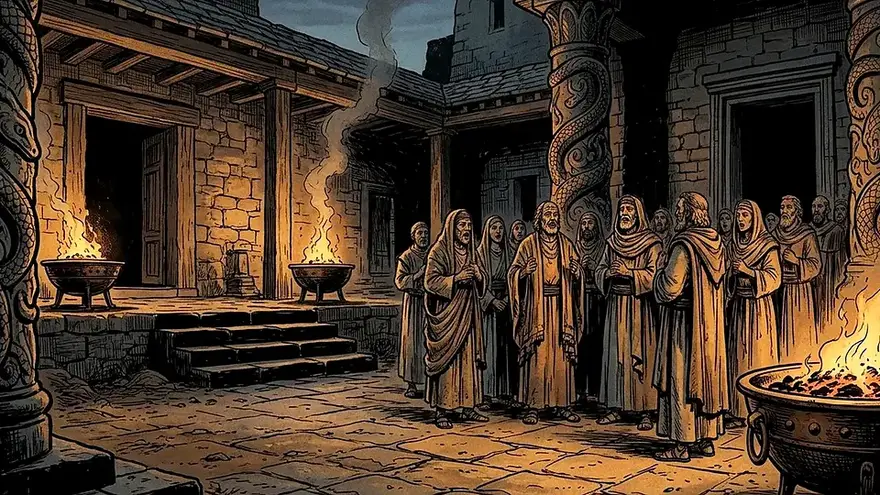
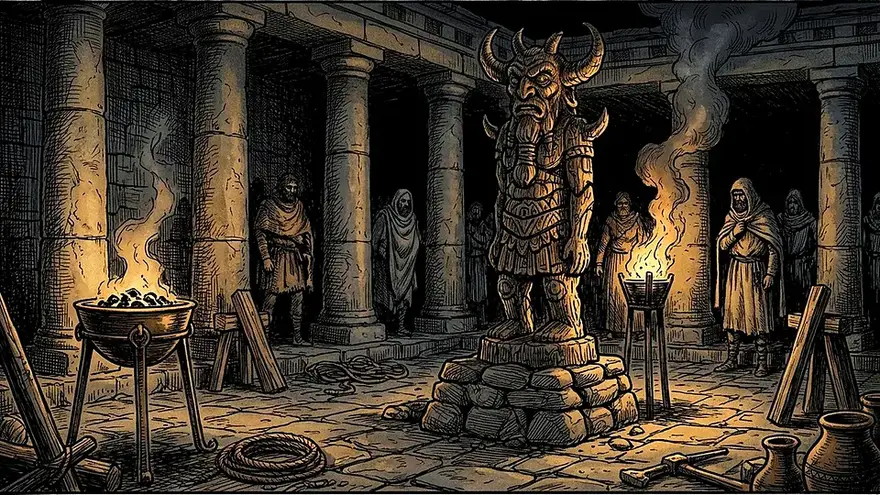
Southern Judah went even further. King Rehoboam's mother Maacah crafted an obscene Asherah image (1 Kings 15:13), and King Manasseh erected a carved Asherah statue right inside Solomon's Temple—where dedicated weavers wove liturgical vestments for Asherah inside YHWH's own courtyard until King Josiah dragged the image out and burned it to powder in the Kidron Valley (2 Kings 23:6–7).
2 Kings 23:6–7“And he brought out the Asherah from the house of the LORD, outside Jerusalem, to the brook Kidron, and burned it at the brook Kidron and beat it to dust... where the women wove hangings for the Asherah.”
The 1975 Kuntillet Ajrud bombshell: 'YHWH of Samaria and his asherah'
In 1975–76, Israeli archaeologist Ze'ev Meshel excavated Kuntillet Ajrud, an 8th-century BCE desert waystation in northern Sinai. Painted in red ink across huge clay storage jars (pithoi) were everyday Hebrew travel blessings: 'I have blessed you by YHWH of Samaria and by his asherah' (ul-asheratoh) and 'by YHWH of Teman and his asherah.'
A second tomb inscription at Khirbet el-Qom near Hebron echoed the exact same formula, alongside hundreds of Judean terracotta 'pillar-figurines' snapped in household ruins across Jerusalem. Because classical Hebrew rarely attaches a possessive suffix ('his') to a proper name, scholars debate whether ordinary Israelites treated 'his asherah' as YHWH's wooden cult-symbol or directly as His divine consort.
Kuntillet Ajrud Pithos A (~800 BCE)“I have blessed you by YHWH of Samaria and by his asherah (ברכת אתכם ליהוה שמרן ולאשרתה).”
Why Elijah, Hosea, and Jeremiah fought household syncretism so fiercely
Suddenly the fiery urgency of Israel's prophets clicks into high-definition historical focus. Most ancient Israelites weren't atheists abandoning YHWH—they were syncretists trying to blend YHWH into Canaan's familiar divine family by giving Him El's old consort and household fertility charms.
When Babylon burned Jerusalem in 586 BCE, Judean refugees in Egypt even lectured the prophet Jeremiah to his face (Jeremiah 44:17–18), blaming their ruin on King Josiah stopping incense cakes for the 'Queen of Heaven'! Only the trauma of Babylonian exile finally cured Judah of Asherah poles—turning Israel's faith into uncompromising monotheism.
Jeremiah 44:17–18“We will burn offerings to the queen of heaven and pour out drink offerings to her, as we did, both we and our fathers, our kings and our officials, in the cities of Judah and in the streets of Jerusalem.”
Asherah in Texts vs. Dirt: Comparing the Four Lines of Evidence
Putting Canaanite tablets, Hebrew Scripture, and Iron Age archaeology side by side shows how deeply Asherah worship penetrated Israel and Judah.
| Source | Date | How Asherah Appears | Historical Significance |
|---|---|---|---|
| Ugaritic Clay Tablets (Ras Shamra) | ~1350–1200 BCE | Lady Athirat of the Sea, royal wife of creator-god El | Proves Asherah was Canaan's top mother-goddess before Israel's monarchy |
| Deuteronomy & Kings | 7th–6th c. BCE compilation | Both goddess (1 Kgs 18:19) and wooden cult-tree pole beside altars | Admits Judah's kings placed Asherah inside Jerusalem's Temple for decades |
| Kuntillet Ajrud & Khirbet el-Qom | ~800–750 BCE | Hebrew ink blessings: 'by YHWH of Samaria/Teman and his asherah' | First extrabiblical proof of folk Israelite syncretism pairing YHWH with an asherah |
| Judean Pillar-Figurines | 8th–7th c. BCE | Over 1,000 small clay female figurines found in Judahite homes | Shows household fertility religion flourished right alongside Josiah's reforms |
What to Remember
- Older Bibles like the 1611 KJV translated Asherah as 'groves,' hiding 40 Hebrew references to Canaan's supreme mother-goddess and her carved wooden tree poles.
- Second Kings 21:7 and 23:6–7 candidly admit Judah's own kings installed a carved Asherah statue inside Jerusalem's Temple, where quarters housed weavers making garments for her.
- In 1975–76, archaeologists at Kuntillet Ajrud unearthed 800 BCE Hebrew blessings invoking 'YHWH of Samaria and his asherah,' proving why biblical prophets fought folk syncretism so fiercely.