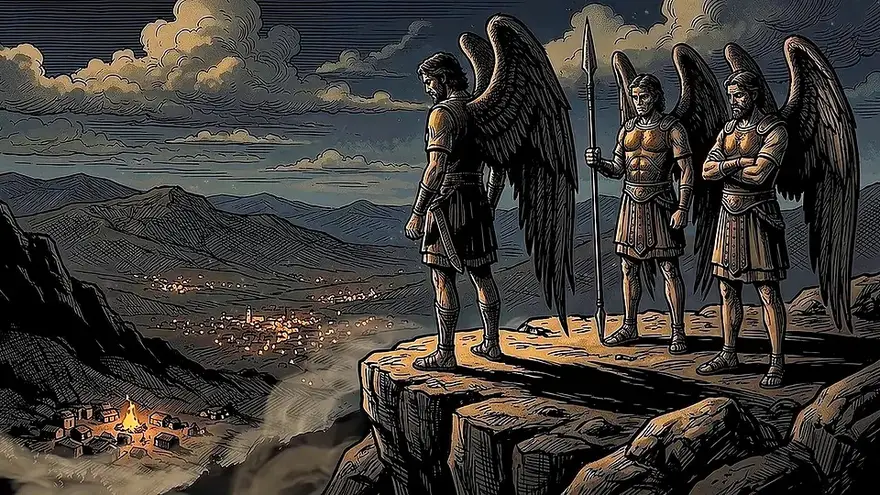
In Genesis 6:1–4, the 'sons of God' (Hebrew: benei ha-elohim) take 'daughters of men,' coinciding with the appearance of renowned warriors called the Nephilim. Elsewhere in the Hebrew Bible (Job 1:6; 38:7), benei ha-elohim refers to heavenly beings of God's divine council—an interpretation expanded in 1 Enoch and echoed in Jude 6 and 2 Peter 2:4. Later rabbinic and Christian writers offered two non-angelic alternatives (divine-king tyrants or the lineage of Seth), while Numbers 13:33 uses the memory of the Nephilim as hyperbole in the panicked report of Moses's spies.
What 'Sons of God' meant in ancient Hebrew
In English, 'sons of God' sounds like pious human believers. In Hebrew, however, the exact phrase benei ha-elohim appears three other times in the Old Testament—all in the Book of Job.
Every single time, it refers to non-human heavenly beings standing in God's divine council.
Job 1:6 & Genesis 6:2“Now there was a day when the sons of God (benei ha-elohim) came to present themselves before the LORD.”
Why It Matters: Third-century BCE Jewish translators in Alexandria rendered Hebrew Nephilim as Greek gigantes ('earth-born titans'), prompting KJV's 'giants,' whereas modern Bibles leave the mysterious Hebrew-Aramaic noun transliterated.
Scrolls & Archaeology: Fifth-century Codex Alexandrinus (A) openly writes hoi angeloi tou theou ('the angels of God') in Genesis 6:2, documenting how early Greek copyists understood benei ha-Elohim. At Qumran, the Aramaic Book of Giants (4Q530 and 4Q531, c. 100 BCE) casts famous Mesopotamian hero Gilgamesh and monster Humbaba alongside Watchers' offspring Ohya and Hahya.
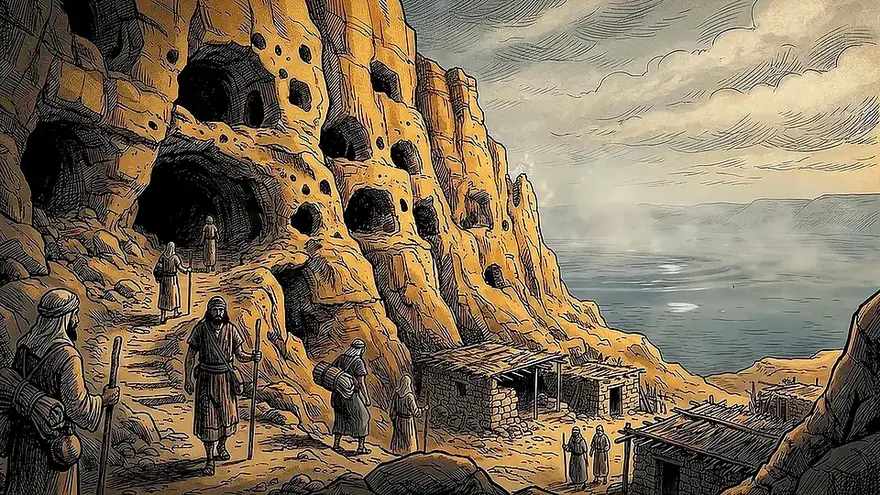
Why Jude and 2 Peter echo this exact reading
During the centuries before Jesus, Jewish scrolls like 1 Enoch called these rebel beings 'the Watchers.'
In the New Testament, both Jude 6 and 2 Peter 2:4 reference angels who abandoned their proper dwelling before Noah's Flood and were chained in gloomy darkness.
2 Peter 2:4–5“God did not spare angels when they sinned, but cast them into Tartarus... when he brought a flood upon the world of the ungodly.”
Why later church fathers switched to 'Sons of Seth'
By the 4th and 5th centuries CE, thinkers like Augustine felt uncomfortable with angels taking physical bodies.
They proposed a non-supernatural alternative: 'sons of God' meant godly men from Seth's family marrying ungodly women from Cain's family—a debate that still divides commentaries today.
Genesis 6:4“The Nephilim were on the earth in those days—and also afterward—when the sons of God came in to the daughters of man.”
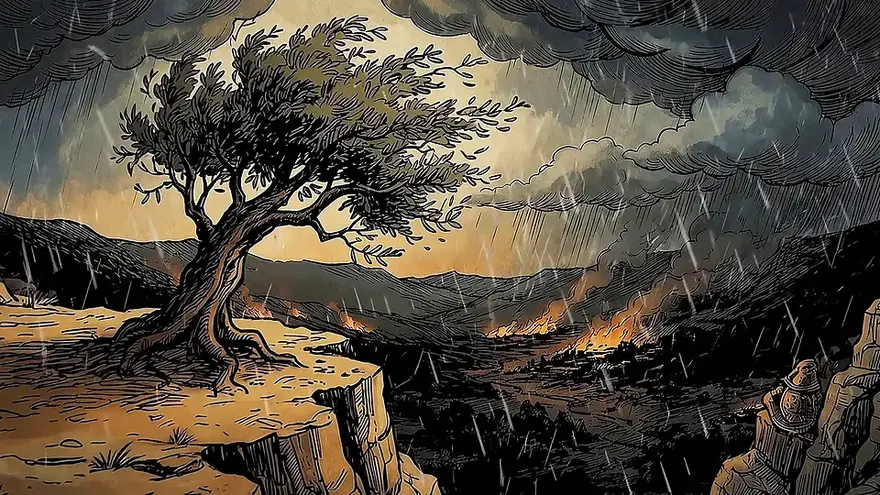
How could Nephilim show up AFTER the global Flood?
Centuries after Noah's Ark, terrified Israelite spies in Numbers 13:33 claim: 'We saw the Nephilim there—we seemed like grasshoppers!'
Notice the context: those ten spies were lying in panic ('the land devours its inhabitants!'), invoking ancient pre-Flood boogeymen to scare Israel out of entering Canaan.
Numbers 13:32–33“So they brought to the people of Israel a bad report... 'There we saw the Nephilim, and we seemed to ourselves like grasshoppers.'”
Three Major Interpretations of 'Sons of God' in Genesis 6:2
Why ancient scrolls and later theologians divided over four verses before Noah's Flood.
| Interpretation | Who Are 'Sons of God'? | Key Ancient Support | Main Strength / Tension |
|---|---|---|---|
| Rebel Heavenly Beings | Members of God's divine council | Job 1:6; 1 Enoch; Jude 6; 2 Peter 2:4 | Matches every other OT use of benei ha-elohim |
| Lineage of Seth | Godly men marrying Cainite women | Julius Africanus; Augustine (5th c. CE) | Avoids embodied angels, but lacks lexical precedent |
| Divine-King Tyrants | Polygamous Bronze Age rulers | 2nd-century CE Aramaic Targums | Fits royal harem abuse, struggles with giant motif |
What to Remember
- Every undisputed Old Testament occurrence of benei ha-elohim (Job 1:6, Job 2:1, Job 38:7) denotes members of the heavenly court rather than ordinary human men.
- Beginning in the 4th–5th centuries CE, Julius Africanus and Augustine popularized the 'Sons of Seth vs. Daughters of Cain' reading to avoid the theological problem of embodied angels.
- In 1 Samuel 17, the Dead Sea Scroll manuscript 4QSamᵃ and the Greek Septuagint record Goliath's height at 'four cubits and a span' (~6 ft 9 in) rather than the Masoretic 'six cubits and a span' (~9 ft 9 in).