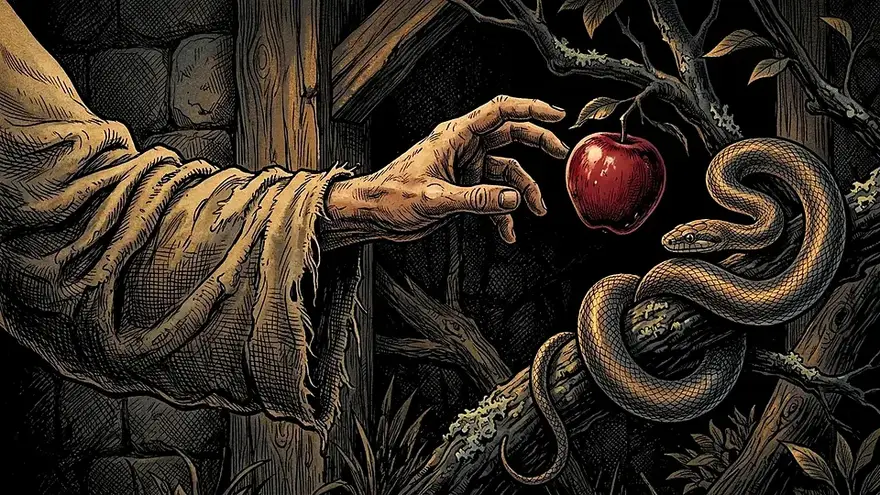
Hebrew Genesis 3 calls Eden's fruit simply peri ('fruit'), never an apple—in fact, sweet orchard apples didn't grow in wild Bronze Age Canaan. Ancient Jewish interpreters proposed figs, grapes, wheat, or citron, while Western Europe pictured an apple because Latin malum meant both 'evil' and 'apple,' cemented forever by Albrecht Dürer and Milton's Paradise Lost.
The one plant Genesis 3 ACTUALLY names is a fig tree
Read Genesis 3:6 closely and the tree's species is deliberately left unnamed—Hebrew calls its fruit only peri ('fruit').
Yet in the very next verse (Genesis 3:7), the moment Adam and Eve's eyes open, they sew together fig leaves (aleh te'enah)—the single botanical species named in the entire scene.
Genesis 3:6–7“She took of its fruit (peri) and ate... Then the eyes of both were opened, and they sewed fig leaves together and made themselves loincloths.”
Why It Matters: Every English Bible from 1611 to today correctly translates Hebrew peri as generic 'fruit'; the Western 'apple' entered Renaissance painting and Milton's Paradise Lost through Jerome's Latin Vulgate pun between mălum ('evil,' short a) and mālum ('apple,' long a).
Scrolls & Archaeology: Archaeobotanical pollen and seed studies demonstrate that sweet orchard apples (Malus domestica, native to Kazakhstan's Tian Shan mountains) were absent from Early Bronze Age Canaan, where Hebrew tappuach likely denoted citron or apricot. In 4th-century CE Galilee, Genesis Rabbah 15:7 preserved fierce rabbinic debate naming four local candidates for Eden's tree: grapevine (R. Meir), fig (R. Nehemiah, matching 3:7's sewn fig leaves), citron, and wheat (R. Judah bar Ilai).
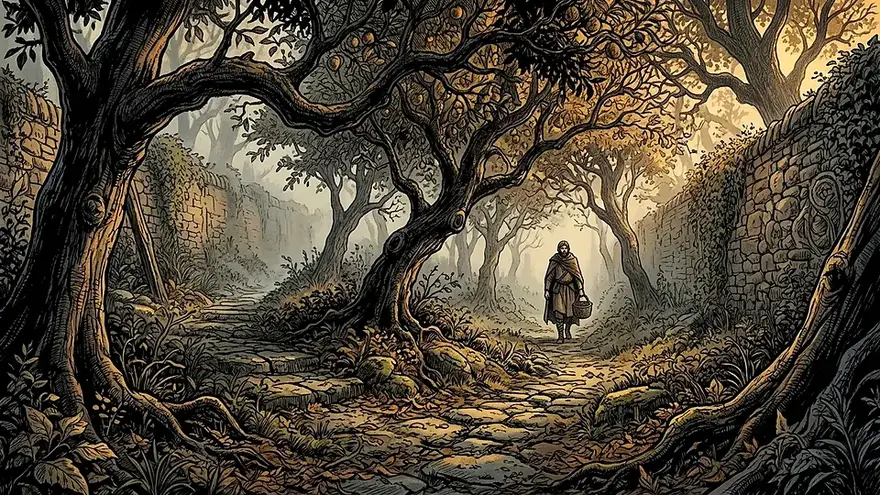
Grapes, figs, citron—or giant stalks of wheat?
Long before anyone painted red apples, Jewish sages in Talmud Berakhot 40a and Genesis Rabbah 15:7 debated four Middle Eastern candidates.
Rabbi Meir argued for grapes (since wine brings lamentation); Rabbi Nehemiah pointed to figs ('by the very thing that ruined them, they covered themselves'); others proposed the fragrant citron (etrog) or even primordial tree-sized wheat.
1 Enoch 32:4 (3rd–2nd c. BCE)“The tree of wisdom... is in height like the fir, and its leaves are like the carob tree, and its fruit is like the clusters of the vine, very delightful.”
The Latin double-meaning pun: mālum ('apple') vs. mălum ('evil')
Around 382 CE, Jerome translated the Hebrew Bible into Latin—and landed on a dazzling pun. In Latin, malum with a short 'a' meant 'evil' (Tree of Knowledge of Good and malum), while malum with a long 'a' meant 'apple' or tree-fruit!
Across medieval Europe, churchgoers heard malum in Genesis 2–3 and painted the fruit as an apple.
Song of Solomon 8:5 (Latin Vulgate Echo)“Under the apple tree (arbore malo) I awakened you; there your mother was in labor with you.”
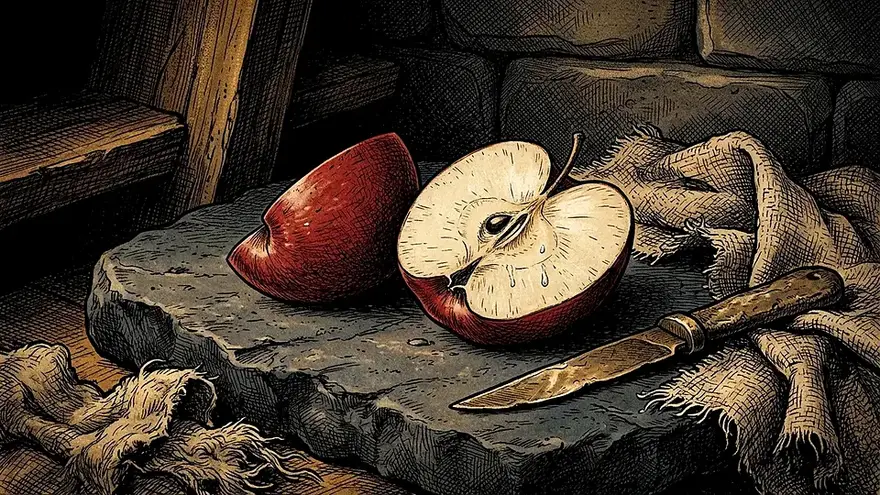
Why Genesis left the species blank on purpose
In 1504 Albrecht Dürer engraved a crisp northern European apple in Eve's hand, and in 1667 John Milton typed 'apple' straight into Paradise Lost, sealing modern pop culture.
Yet Genesis kept the fruit unnamed for a profound reason: had Moses named figs or grapes, people would have blamed a toxic plant—instead of a test of human trust.
Genesis 2:16–17“You may surely eat of every tree of the garden, but of the tree of the knowledge of good and evil you shall not eat.”
What Species Was Eden's Forbidden Fruit? 5 Historic Candidates
Compare what Genesis 3 actually names against ancient Jewish debates and Jerome's Latin pun.
Genesis 3:6 calls the fruit simply peri ('fruit'), yet one verse later Adam and Eve immediately sew fig leaves (aleh te'enah). Rabbi Nehemiah argued: 'By the very thing with which they disgraced themselves, they were remedied.'
Third-century BCE 1 Enoch 32:4 describes the Tree of Wisdom bearing 'fruit like clusters of the vine,' and Rabbi Meir pointed to Noah's vineyard and wine's power to cloud human judgment.
Rabbi Abba of Acco noted Genesis 1:11–12's ideal 'fruit tree' where even the wood was fragrant like the fruit—preserved annually in Sukkot's ceremonial citron.
Wild Canaanite crabapples were sour and woody. Only when Jerome's Latin Vulgate used malum for 'evil'—identical in spelling to malum ('apple')—did European painters and Milton's Paradise Lost crown the red apple.
Top Historic Candidates for Eden's Forbidden Fruit
Why Middle Eastern readers pictured figs or grapes while Western Europe painted apples.
| Candidate | Key Ancient Advocate | Textual / Cultural Clue | Likelihood in Bronze Age Levant |
|---|---|---|---|
| Fig | Rabbi Nehemiah (Talmud) | Fig leaves immediately sewn in Genesis 3:7 | Native staple tree across ancient Canaan |
| Grape / Vine | 1 Enoch 32:4; Rabbi Meir | Wine linked to Noah's fall and altered sight | Native staple across Levant |
| Citron (Etrog) | Genesis Rabbah 15:7 | Fragrant golden fruit & edible-tasting bark | Revered sacred Sukkot fruit |
| Red Sweet Apple | Latin Art & John Milton (1667) | Latin pun: mălum ('evil') / mālum ('apple') | Sweet apples came from Kazakhstan later |
What to Remember
- The one plant Genesis 3 ACTUALLY names is a fig tree (Genesis 3:6–7).
- Grapes, figs, citron—or giant stalks of wheat? (1 Enoch 32:4 (3rd–2nd c. BCE)).
- The Latin double-meaning pun: mālum ('apple') vs. mălum ('evil') (Song of Solomon 8:5 (Latin Vulgate Echo)).